Travel to Jordan
Day 3 Amman - Madaba - Mount Nebo - Dead Sea (74 Km.)
(34 km. away) Madaba: Madaba, known as the ‘City of Mosaics’, is a historical gem in central Jordan, famous for its impressive Byzantine and Umayyad mosaics. Founded in the Iron Age, the city has been a crossroads of diverse cultures and civilisations. During the Byzantine period, Madaba became an important Christian centre, leaving an artistic legacy notably visible in its elaborate mosaics. The mixture of history and art makes Madaba a fascinating destination for archaeology and history lovers. We begin our visit at the Madaba Archeological Park, which houses the Burnt Palace, a remarkable 6th century building that showcases the splendour of Byzantine architecture. Here, intricately designed mosaics tell stories of daily life and mythology of the time.

Madaba - Archaeological Park
Within walking distance is St. George's Orthodox Church, home to the famous Madaba Map, a 6th century mosaic that is the oldest known map of the Holy Land and Jerusalem. This detailed map offers a unique insight into biblical geography and is an invaluable piece for historians and archaeologists. Continuing our tour, we visit the Church of St. John the Baptist, a 19th century structure built on ancient ruins. The church offers panoramic views from its bell tower and houses a series of fascinating underground crypts. Further on, we head to the Church of the Apostles, which dates back to 578 AD. This site is known for its magnificent mosaic depicting Talia, the personification of the city of Madaba, surrounded by vibrant scenes of flora and fauna. The wealth of mosaics and history in every corner of Madaba make it an essential stop on any trip to Jordan.
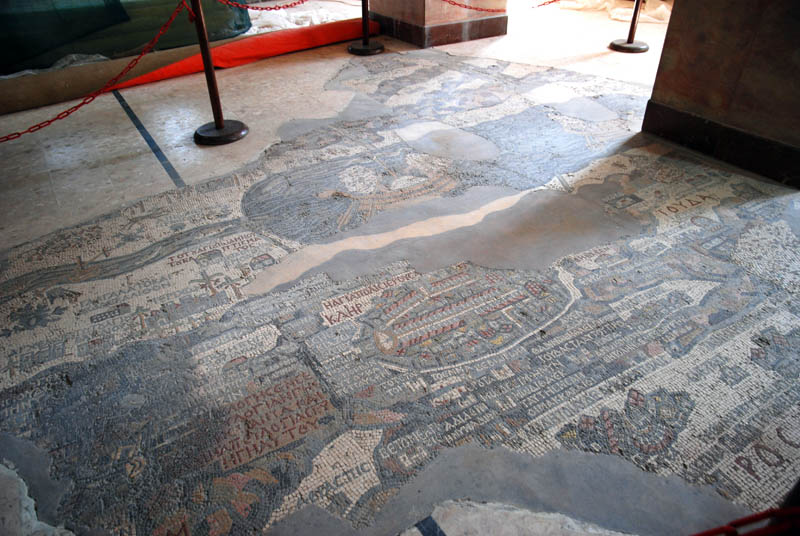
Madaba map
(9 km. away) Muont Nebo: Mount Nebo, located some 800 metres above sea level, is a site of great historical and religious significance in Jordan. According to biblical tradition, it is the site where Moses beheld the Promised Land before his death. From the top, visitors enjoy spectacular panoramic views of the Jordan Valley, the Dead Sea and even, on clear days, Jerusalem. The hill is home to a Franciscan church built on the remains of a 4th-century Byzantine basilica, which contains impressive mosaics and other ancient artefacts. In addition, a modern monument in the form of a bronze serpent recalls the rod of Moses. This holy site is not only a pilgrimage destination for Christians, but also a point of archaeological and tourist interest.
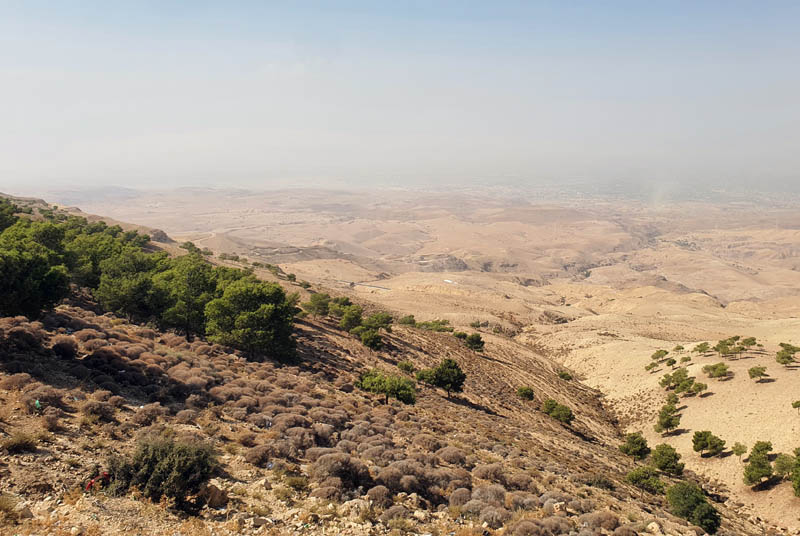
Views of the "Promised Land" from Mount Nebo
(31 km. away) Dead Sea: The Dead Sea, located at the lowest point on Earth at more than 400 metres below sea level, is a natural wonder shared by Jordan and Israel. The Dead Sea is remarkable for its exceptional salinity, which is approximately ten times higher than that of the oceans, with a salt concentration of about 34%. This high salinity is due to several geological and climatic factors. The Dead Sea has no natural outlets, which means that water flowing into it from the Jordan River and other sources can only flow out by evaporation. The intense heat and low rainfall in the region accelerate this evaporation process, leaving behind large amounts of salt and dissolved minerals.
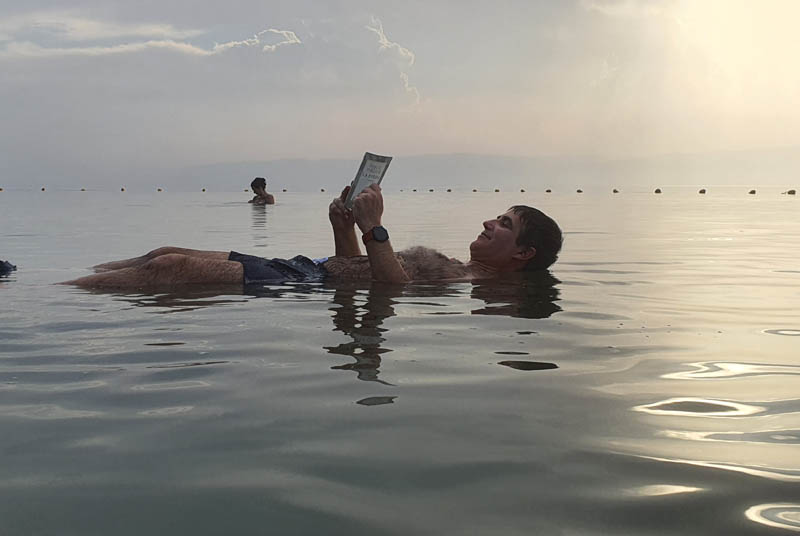
Floating in the waters of the Dead Sea
The high salinity allows bathers to float easily on the surface, a unique experience that attracts visitors from all over the world. In addition, minerals such as magnesium, sodium, potassium and bromide present in the water and mud of the Dead Sea have therapeutic properties, used in health and beauty treatments. These minerals are known for their skin benefits, muscle pain relief and improvement of dermatological conditions, making the Dead Sea a destination not only for tourism, but also for wellness and health. On the other hand, the high salinity of the Dead Sea creates an inhospitable environment for aquatic life, hence its name, as almost no plants or animals can survive in its waters.
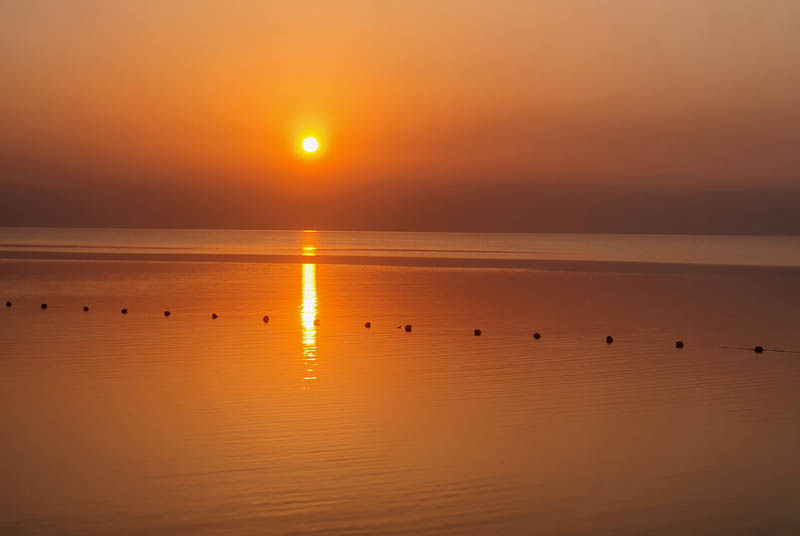
Sunset at the Dead Sea
There are several public beaches along the Dead Sea coast that allow access free of charge or for a small fee. These beaches usually have basic facilities such as showers and toilets. This is an economical option for those who wish to experience the floating and mud benefits of the Dead Sea. There are also many luxury resorts and hotels located along the coast that offer private access to their beaches. These establishments tend to provide more comfortable facilities and additional services such as swimming pools, spas and lounge areas, but the price is usually quite high. We got a good deal at the Almira Beach Dead Sea, where we were able to swim and enjoy mud bathing.